Mozart’s Command of the Imagination and the Ear
From Jan Swafford’s, The Reign of Love, a Mozart Biography
Summary and Analysis by Orion Music and Arts
Copyright, ©, Orion Music and Arts MA 2023-2024,
All Rights Reserved
Mozart Studied as A Child
In Chapter Four of Jan Swafford’s ’An Instrument at the Command of Music’ rests a description of an early educational study involving the young Mozart as a subject.
Professor Samuel Tissot, an early educational psychologist, spent time with the young Mozart; in hopes that he might better study and examine him as an example of musical and instrumental giftedness at the zenith.
‘Imagination as Musical as his ear’
Tissot’s writings include descriptions about Mozart’s imagination and listening faculty – or that he seemed to have an ‘imagination as musical as his ear’.
Tissot saw, as a consequence, musicality and imagination as essential to the very young Mozart’s musical art.
Also, Tissot noted that Mozart was drawn strongly to the harpsichord – almost as if by forces, and of a kind that was entirely out of his control – ’he was sometimes involuntarily driven to his harpsichord, as by a hidden force’. Nevertheless, Mozart lost no self-possession, but rather ‘drew from it sounds that were the living expression of the idea that had seized him’.
Although Mozart’s skills appeared entirely natural, unplanned, and from a source that did not seem to be in his conscious strength, volition, or control, Mozart remained completely and wholly in control of his skills, improvising and performing upon request.
This seeming disjunct between inspiration, ability, self-control, and self-abnegation are not inconsistent with Mozart’s later accounts of his musical skills, and when queried.
Inspiration and Openness
Mozart later describes his compositional skills as coming from inspiration that sets things ablaze in his mind, to music consequences like ideas that appear to have material tangibility in terms of its musical results; which he also senses the results of all at a glance, as albeit something over which he did not appear to seem to have any actual control.
As a consequence, it might be advised that musicians and performers continue to keep an open mind as to their musical and artistic experiences, and better that they somehow be turned, through the ear and the imagination, into inspired musical material later.
FURTHER INFORMATION
For more educational material on the subject, violin lessons, violin accompaniment, or anything in between, please feel free to reach us using the contact form or at violinpedagogies@yahoo.com, a teaching artistry education and performance service by Orion Music and Arts Cambridge MA.
By Orion Music and Arts, Cambridge MA, 2023-2024
Copyright, ©, Orion Music and Arts MA 2023-2024,
All Rights Reserved
For Purchase
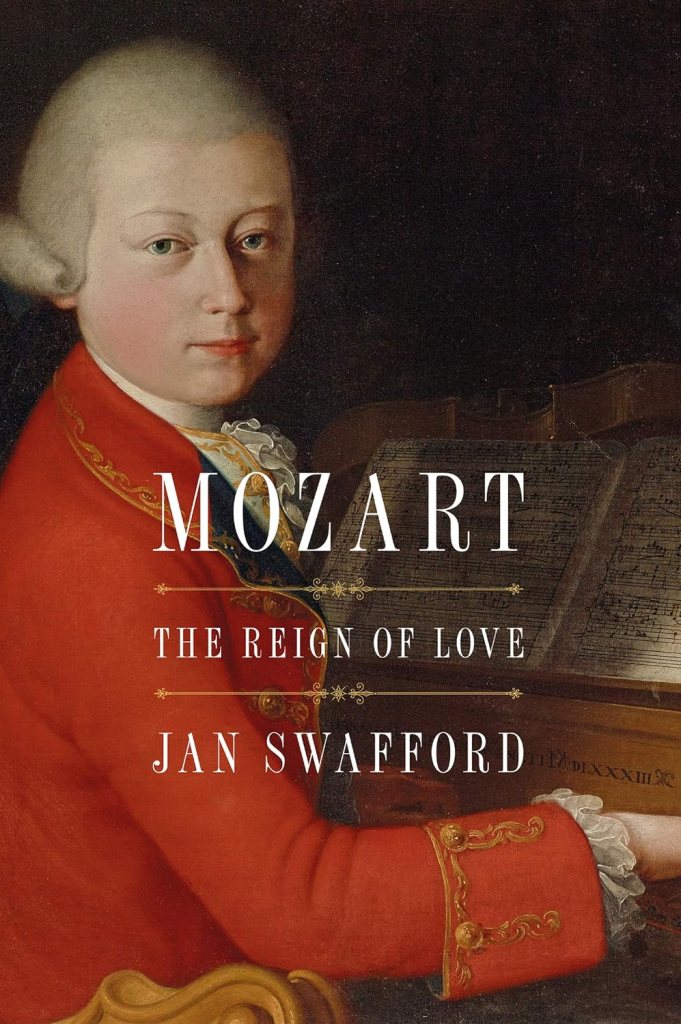
If you would like to purchase the book mentioned, Jan Swafford’s The Reign of Love, please click on the link here.
“The music is not in the notes,
but in the silence between.”
― Wolfgang Amadeus Mozart
 Violin Performance Notes - By Orion Music and Arts Cambridge MA
Leave a comment