Advice on Different Kinds of Awarenesses for Violin Performance
As Excerpted from The Inner Game of Music, by Barry Green and Timothy Galloway
Summarized and Analyzed
By Orion Music and Arts, Cambridge MA, 2023-2024
Copyright, ©, Orion Music and Arts MA 2023-2024,
All Rights Reserved
Awareness for Violin Performance and Growth
In Barry Green and Timothy Galloway’s The Inner Game of Music, musical awareness is cited as an essential element for musical growth.
Awareness, as Green writes, comes in at least four forms.
The first – visual. Green writes of how one can be aware of their confidence, for example, or how confidently they appear on a stage.
In addition, Green writes of how one can also be aware of what ‘images’ a piece of music might evoke.
Visualizing Awareness
Both involve visualizing of a kind – the first, of how one presents or is presented as a subject on stage, and the second, what the music might look or sound like in terms of image and metaphor.
Visualizing Sound
The second, awareness of sound. Examples of acoustic awareness, as Green has written, may involve memory of what the kind of sound one may have made may have been like – either in terms of its highs as well as its lows – and also being able to remember, ‘in your head’, what could have made those sounds. Here, awareness involves both memory of a sound as well as how it might have been made.
Awareness of Feeling
The third, an awareness of feeling. Green describes being able to remember how one felt as one makes a sound as critical also, to violin or musical performance. A memory of feeling or physical sensation is as essential as a memory of how something might have been heard.
Understanding Awareness
The fourth, an awareness of awareness, called ‘understanding awareness’. This is a meta-critical skill, which involves being aware of how one comes to understand, remember, and perform. It ranges from cerebral ‘learning’ to being able, even, to enumerate the things learned. Mental checks and balances are essential here – one should know, ideally, what they they done, as well as what they know of the music, and how they might have done it.
Green strongly encourages unthinking reliance on ‘blind trust’, and encourages, instead, consciousness of one’s ‘preparedness’ in a critically, carefully, and individually tailored understanding of one’s music, performance, and actions involved in the task.
FURTHER INFORMATION
For more educational material on the subject, violin lessons, violin accompaniment, or anything in between, please feel free to reach us using the contact form or at violinpedagogies@yahoo.com, a teaching artistry education and performance service by Orion Music and Arts Cambridge MA.
By Orion Music and Arts, Cambridge MA, 2023-2024
Copyright, ©, Orion Music and Arts MA 2023-2024,
All Rights Reserved
FOR PURCHASE
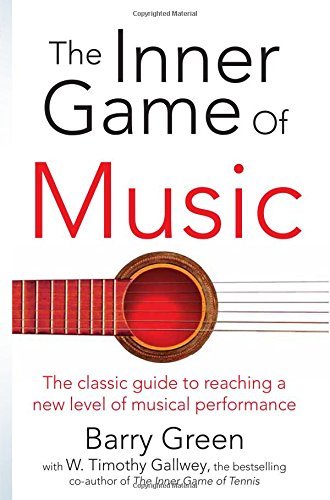
You can purchase The Inner Game of Music by clicking on this link, here.
“Whenever you are playing or singing music, and you notice you’re in a trying state, stop trying, and focus your awareness on a single element of your movement at a time.“
By Barry Green
 Violin Performance Notes - By Orion Music and Arts Cambridge MA
Leave a comment